Buy geekshop.eu ?
We are moving the project
geekshop.eu .
Are you interested in purchasing the domain
geekshop.eu ?
domain@kv-gmbh.de · 0541-91531010
Buy geekshop.eu ?
What is the difference between a power take-off shaft and a drive shaft?
A power take-off (PTO) shaft is a type of drive shaft that transfers power from a vehicle's engine to an attachment or implement, such as a pump or generator. The main difference between a PTO shaft and a regular drive shaft is that a PTO shaft is specifically designed to transfer power to external equipment, while a drive shaft is typically used to transfer power within a vehicle's transmission or between different components of a vehicle. Additionally, PTO shafts are often detachable and can be connected and disconnected as needed, whereas a drive shaft is a permanent component of a vehicle's drivetrain. **
Why are there no simple motorcycles with shaft drive or belt drive?
There are no simple motorcycles with shaft drive or belt drive because these systems are more complex and expensive to manufacture compared to chain drive systems. Chain drives are simpler, lighter, and more cost-effective, making them the preferred choice for most motorcycles. Additionally, chain drives offer easier maintenance and customization options, which are important factors for many motorcycle enthusiasts. Overall, the simplicity and efficiency of chain drives make them the more popular choice in the motorcycle industry. **
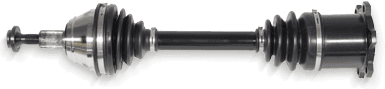

Similar search terms for PASCAL-G2B028PC-Drive-shaft
Top-Angebote
Products related to PASCAL-G2B028PC-Drive-shaft:
-
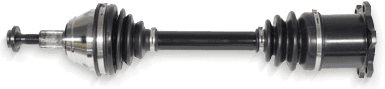
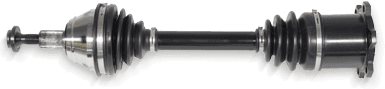
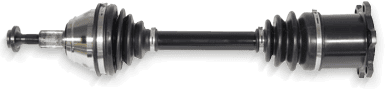
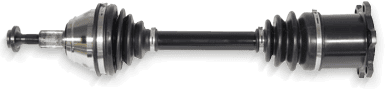
PASCAL G2F002PC Drive shaftFitting Position: Front Axle Right; Braking/Driving Dynamics: for vehicles without ABS; Length [mm]: 870; External Toothing wheel side: 22; Internal Gearing Diff. Side (connecting shaft connection): 23; Number of Teeth, ABS ring: 4479,99 £*Shipping: 8,45 £Secure redirect to the provider
-
PASCAL G2G025PC Drive shaftFitting Position: Front Axle Right; Braking/Driving Dynamics: for vehicles with ABS; Length [mm]: 555; External Toothing wheel side: 38; Internal Gearing Diff. Side (connecting shaft connection): 35; Number of Teeth, ABS ring: 48112,99 £*Shipping: 8,45 £Secure redirect to the provider

-
How to calculate the moment of inertia of the drive shaft?
To calculate the moment of inertia of the drive shaft, you need to know the mass of the shaft and its distribution along its length. The moment of inertia can be calculated using the formula I = ∫r^2 dm, where r is the distance from the axis of rotation to the element of mass dm. By integrating this formula over the entire length of the shaft, you can determine the moment of inertia of the drive shaft. Alternatively, you can also use the parallel axis theorem to calculate the moment of inertia if the shaft is not rotating about its center of mass. **
-
What is a Pascal?
A Pascal is a unit of pressure in the International System of Units (SI), named after the French mathematician and physicist Blaise Pascal. It is defined as one newton per square meter, which means it measures the amount of force applied over a given area. The Pascal is commonly used in scientific and engineering contexts to quantify pressure, stress, and mechanical strength. **
-
How do you calculate the moment of inertia of the drive shaft?
The moment of inertia of a drive shaft can be calculated using the formula for the moment of inertia of a solid cylinder, which is \( I = \frac{1}{2} m r^2 \), where \( m \) is the mass of the shaft and \( r \) is the radius of the shaft. If the drive shaft is not a solid cylinder, the moment of inertia can be calculated by summing the moments of inertia of its individual components using the parallel axis theorem. This involves calculating the moment of inertia of each component about its own center of mass and then adding the mass of each component multiplied by the square of the distance between its center of mass and the axis of rotation. **
-
What is a Pascal calculator?
A Pascal calculator is a type of mechanical calculator designed by Blaise Pascal in the 17th century. It was one of the earliest mechanical calculators and was used for performing basic arithmetic operations such as addition, subtraction, multiplication, and division. The Pascal calculator used a series of gears and wheels to perform calculations, and it was operated by turning a crank. It was a significant advancement in the history of computing and contributed to the development of more advanced calculating machines in the future. **

Is the programming language Pascal outdated?
While Pascal is not as widely used today as it was in the past, it is not necessarily considered outdated. Pascal is still used in some educational settings and in legacy systems. However, many newer programming languages have emerged that are more popular and offer more features and capabilities. Overall, Pascal may not be as commonly used in the industry today, but it still has its place in certain contexts. **
What are the roots in Pascal?
In Pascal, the roots refer to the values of the variable that satisfy the equation or inequality. For example, in a quadratic equation, the roots are the values of the variable that make the equation equal to zero. These roots can be real or complex numbers, and they can be found using various methods such as factoring, completing the square, or using the quadratic formula. In general, the roots of an equation are the solutions to that equation. **
Top-Angebote
Products related to PASCAL-G2B028PC-Drive-shaft:
-
PASCAL G2F002PC Drive shaftFitting Position: Front Axle Right; Braking/Driving Dynamics: for vehicles without ABS; Length [mm]: 870; External Toothing wheel side: 22; Internal Gearing Diff. Side (connecting shaft connection): 23; Number of Teeth, ABS ring: 4479,99 £*Shipping: 8,45 £Secure redirect to the provider
-
What is the difference between a power take-off shaft and a drive shaft?
A power take-off (PTO) shaft is a type of drive shaft that transfers power from a vehicle's engine to an attachment or implement, such as a pump or generator. The main difference between a PTO shaft and a regular drive shaft is that a PTO shaft is specifically designed to transfer power to external equipment, while a drive shaft is typically used to transfer power within a vehicle's transmission or between different components of a vehicle. Additionally, PTO shafts are often detachable and can be connected and disconnected as needed, whereas a drive shaft is a permanent component of a vehicle's drivetrain. **
-
Why are there no simple motorcycles with shaft drive or belt drive?
There are no simple motorcycles with shaft drive or belt drive because these systems are more complex and expensive to manufacture compared to chain drive systems. Chain drives are simpler, lighter, and more cost-effective, making them the preferred choice for most motorcycles. Additionally, chain drives offer easier maintenance and customization options, which are important factors for many motorcycle enthusiasts. Overall, the simplicity and efficiency of chain drives make them the more popular choice in the motorcycle industry. **
-
How to calculate the moment of inertia of the drive shaft?
To calculate the moment of inertia of the drive shaft, you need to know the mass of the shaft and its distribution along its length. The moment of inertia can be calculated using the formula I = ∫r^2 dm, where r is the distance from the axis of rotation to the element of mass dm. By integrating this formula over the entire length of the shaft, you can determine the moment of inertia of the drive shaft. Alternatively, you can also use the parallel axis theorem to calculate the moment of inertia if the shaft is not rotating about its center of mass. **
-
What is a Pascal?
A Pascal is a unit of pressure in the International System of Units (SI), named after the French mathematician and physicist Blaise Pascal. It is defined as one newton per square meter, which means it measures the amount of force applied over a given area. The Pascal is commonly used in scientific and engineering contexts to quantify pressure, stress, and mechanical strength. **
Similar search terms for PASCAL-G2B028PC-Drive-shaft
-
PASCAL G2G025PC Drive shaftFitting Position: Front Axle Right; Braking/Driving Dynamics: for vehicles with ABS; Length [mm]: 555; External Toothing wheel side: 38; Internal Gearing Diff. Side (connecting shaft connection): 35; Number of Teeth, ABS ring: 48112,99 £*Shipping: 8,45 £Secure redirect to the provider
-
PASCAL G2W043PC Drive shaftFitting Position: Front Axle Left; Length [mm]: 620; External Toothing wheel side: 38; Internal Gearing Diff. Side (connecting shaft connection): 26; Transmission Type: 6-Speed Manual Transmission; Construction Year to: 05/2012; Engine Code: CJKA, CAAA, CSDA; Vehicle Identification Number (VIN) from: 7H-A-200 001, 7J-A-200 001175,99 £*Shipping: 1,99 £Secure redirect to the provider
-
How do you calculate the moment of inertia of the drive shaft?
The moment of inertia of a drive shaft can be calculated using the formula for the moment of inertia of a solid cylinder, which is \( I = \frac{1}{2} m r^2 \), where \( m \) is the mass of the shaft and \( r \) is the radius of the shaft. If the drive shaft is not a solid cylinder, the moment of inertia can be calculated by summing the moments of inertia of its individual components using the parallel axis theorem. This involves calculating the moment of inertia of each component about its own center of mass and then adding the mass of each component multiplied by the square of the distance between its center of mass and the axis of rotation. **
-
What is a Pascal calculator?
A Pascal calculator is a type of mechanical calculator designed by Blaise Pascal in the 17th century. It was one of the earliest mechanical calculators and was used for performing basic arithmetic operations such as addition, subtraction, multiplication, and division. The Pascal calculator used a series of gears and wheels to perform calculations, and it was operated by turning a crank. It was a significant advancement in the history of computing and contributed to the development of more advanced calculating machines in the future. **
-
Is the programming language Pascal outdated?
While Pascal is not as widely used today as it was in the past, it is not necessarily considered outdated. Pascal is still used in some educational settings and in legacy systems. However, many newer programming languages have emerged that are more popular and offer more features and capabilities. Overall, Pascal may not be as commonly used in the industry today, but it still has its place in certain contexts. **
-
What are the roots in Pascal?
In Pascal, the roots refer to the values of the variable that satisfy the equation or inequality. For example, in a quadratic equation, the roots are the values of the variable that make the equation equal to zero. These roots can be real or complex numbers, and they can be found using various methods such as factoring, completing the square, or using the quadratic formula. In general, the roots of an equation are the solutions to that equation. **
* All prices are inclusive of VAT and, if applicable, plus shipping costs. The offer information is based on the details provided by the respective shop and is updated through automated processes. Real-time updates do not occur, so deviations can occur in individual cases. ** Note: Parts of this content were created by AI.